Fart Together Timing: Getting the Crew to Act Together
How fart timing works in Fart Together's co-op rafting, with cue routines, obstacle-by-obstacle preparation, and demo practice habits.
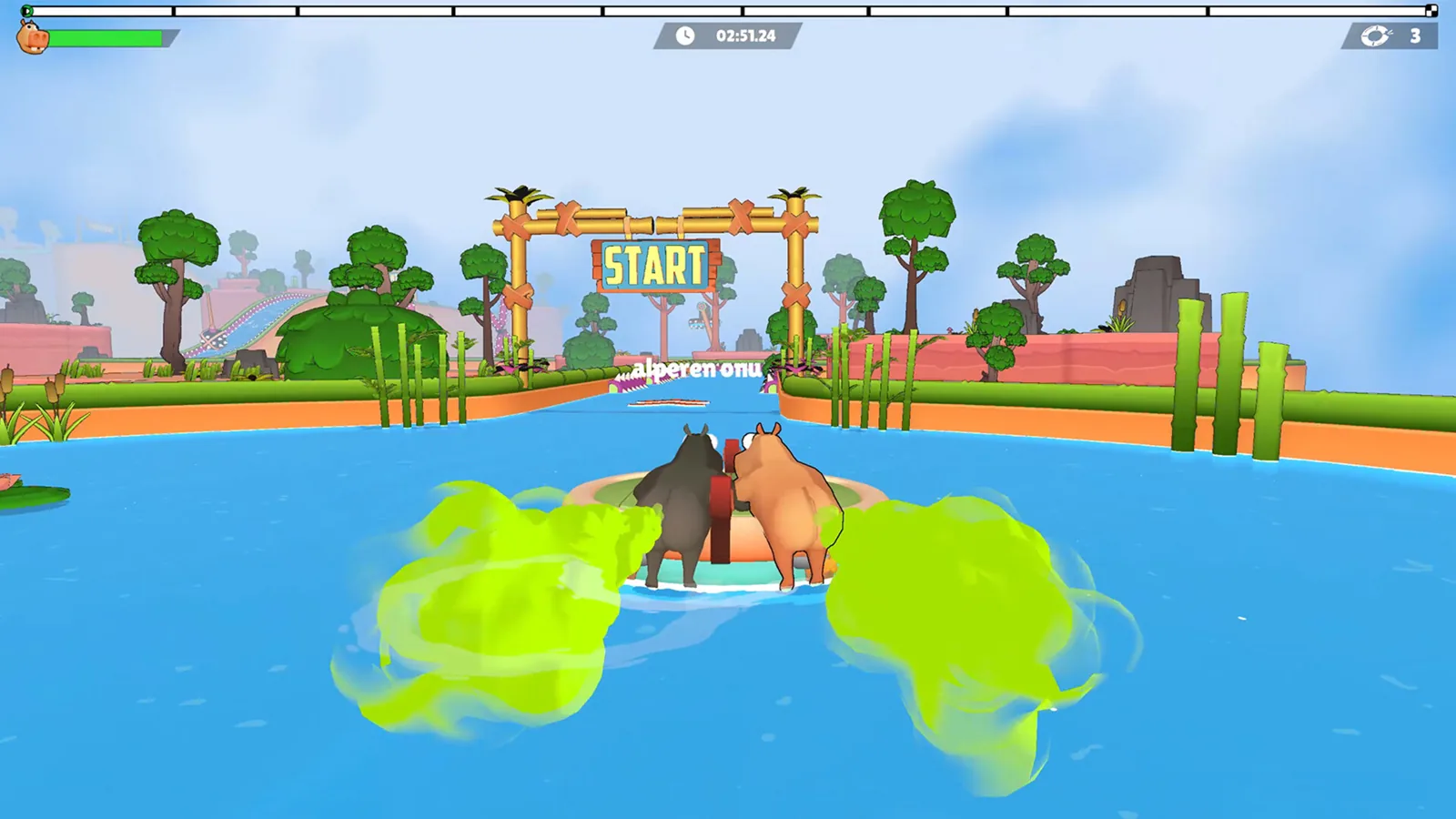
Table of Contents
Fart Together timing is about when each player commits a fart, not how hard it is or which way it points. The raft is a single shared body, and the official Steam page says it reacts to "the force, direction, and timing of each player." Aim and power are things you can fix on your own; timing is the one input that only works if the whole crew agrees on the same instant.
The short version: one caller names the target and the power, everyone confirms they can deliver, the push happens on a single spoken word, and the crew reviews exactly one variable afterwards.
The three inputs and what each one breaks
| Input | Who controls it | What it looks like when it is wrong |
|---|---|---|
| Direction | Each player individually | The crew pulls the raft apart, or one player fights the agreed line |
| Gas power | Each player individually | The raft overshoots a gap or barely clears a lip |
| Timing | The crew collectively | Pushes arrive staggered, so the raft wobbles, stalls, or turns late |
| The call | Whoever is calling | The plan changes halfway through a manoeuvre |
Keeping these apart matters when you talk about a failed run. If everyone was pointed the right way and pushed with the right force but the raft still lurched, the problem was the moment, not the plan.
Why the design keeps pushing you toward "at the same time"
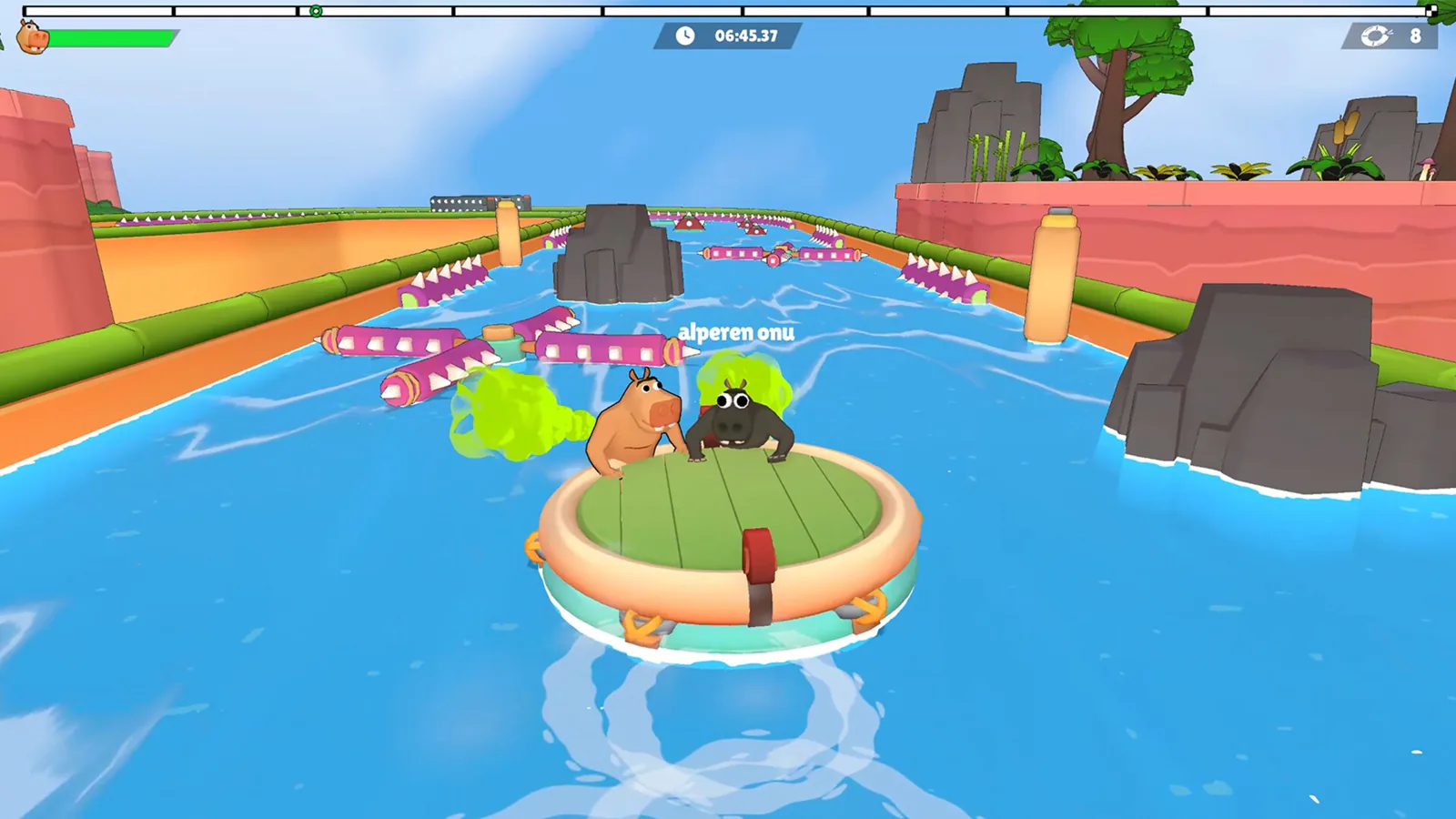
The Steam page is unusually direct about this: the secret is not farting harder, it is farting together at the right time. It also warns that one player going the wrong way, reacting late, or pushing at the wrong moment can send the whole raft off course — and that some sections call for the entire crew to make their move at exactly the same instant.
It is not always a simultaneous push, though. The same page notes that courses ask the crew to speed up in some places and slow down in others, so "everyone always farts together" is the wrong default. The skill is recognising which kind of moment you are in.
Build one cue your crew all recognises
None of this is a menu, a keybind, or an in-game command — it is voice-chat vocabulary you invent and then keep using.
- Name the target, not a compass direction. "The gap past the orange buoy" survives panic better than "left", especially if players are watching different parts of the screen.
- Say the power out loud. A nudge and a full push are different asks; the cue word alone does not communicate which one you want.
- Take a readiness round. Every player answers, including anyone who is low on gas and cannot deliver the push being planned.
- Send it on one word. Everyone acts on that word — not during a countdown, not a beat after it.
- If it falls apart, collapse to one objective. Replace three competing corrections with a single instruction for the next attempt.
Countdowns are the classic failure mode: one player leaves on "three", another waits for "go", and the raft receives two half-pushes instead of one full one. A single trigger word removes the ambiguity.
Timing changes with the obstacle
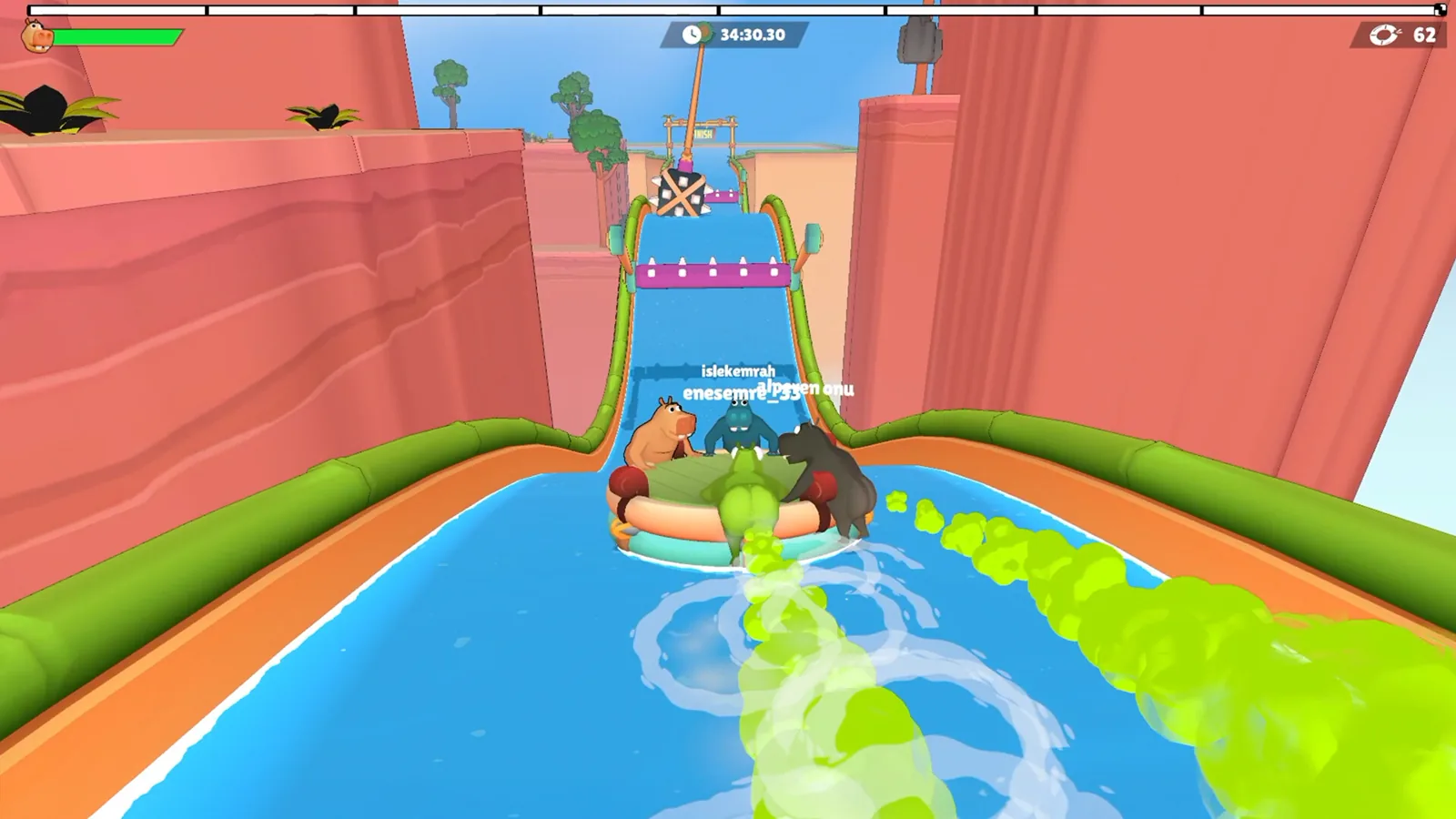
| Obstacle | The timing question it asks | What to settle before the cue |
|---|---|---|
| Narrow passage | When does the crew stop adjusting and commit to a line? | The exact line through the gap, agreed while there is still room to steer |
| Sharp turn | When does everyone start turning? | Call the corner early enough that all players have re-aimed before the go |
| Moving obstacle | Which part of the hazard's cycle do you cross on? | Watch one full pass, then name the window you are taking |
| Balance-throwing hazard | How does the crew recover without over-correcting? | One correction, from one voice, before anyone else piles in |
The common thread is that preparation happens before the trigger word. Once the raft is already inside a tight gap or halfway through a turn, extra instructions mostly add noise.
Gas power, and the stamina question
The Steam page lists gas power as one of the three things you coordinate alongside direction and timing, and it describes courses that sometimes want acceleration and sometimes want restraint. That makes "slow down" a legitimate call, not a failure of nerve — announce it before the crew has already committed to speed.
The Fart Together Wiki's timing page adds that the demo also involves stamina management, which is worth treating as a community report rather than a documented system. Taken as player advice, the practical points are sound:
- Say so when your remaining stamina means you cannot carry out the plan as described.
- Confirm readiness before the caller commits the crew to a manoeuvre.
- Do not promise a push you cannot currently back up with gas.
- When reviewing a failed attempt, put gas use on the same list as aim and cue timing.
The useful distinction is willingness versus capacity. A teammate can understand the plan perfectly and still need to say that their stamina will not stretch to it.
Reviewing a run without starting an argument
| What went wrong | Change exactly one thing next attempt |
|---|---|
| Inputs arrived at different moments | Re-time the cue; leave aim and power untouched |
| The crew moved as one but the raft went the wrong way | Keep the cue; fix the aim |
| The raft overshot, or barely moved | State the intended power alongside the cue |
| A player could not follow through | Ask for gas and stamina status before the next go |
| Two players were correcting at once | Nominate a single caller for that attempt |
Change one variable per attempt, otherwise you cannot tell which change helped. If the cue was the problem, fix the cue; if the cue was clean but the approach was wrong, work on the approach.
Practising in the demo
The demo is free on Steam, and the developer's 17 October 2026 announcement notes that it has been patched in response to player feedback. A session works better with a stated goal — "cleaner corner calls this run" or "one caller only" — than with a general intention to get better.
The Fart Together Wiki estimates a co-op demo run at roughly 15–55 minutes depending on how well the crew coordinates. Treat that as a player estimate rather than a fixed figure, and budget extra time if your group is still inventing its vocabulary.
What this page can and cannot settle
The Steam page lists a Windows release dated 29 October 2026, free to play in Early Access. It describes the design in general terms — narrow passages, sharp turns, moving obstacles, hazards that throw the raft off balance — but it does not publish per-course timing values or input windows, so precise timings have to be learned by running the demo with your own crew. Advice here is about communication habits that make those timings repeatable, not about frame data.
FAQ
What does Fart Together timing mean?
It is the moment each player commits their fart relative to everyone else on the raft. Because the raft reacts to the combined force, direction, and timing of all players, a well-aimed push that lands a second early or late still disrupts the manoeuvre.
Should everyone fart at the same time?
Sometimes, but not always. The Steam page says some sections require the whole crew to act at exactly the same moment, while others call for speeding up or slowing down. Agree on which kind of moment you are in before the caller gives the word.
How many players steer one raft?
The Steam page describes co-op for 2–4 players sharing a single raft, with every player's input affecting the same physics body.
Can we practise timing before release?
Yes — the demo is available free on Steam, and the developer has been patching it based on feedback. Pick one objective per session, change one variable per attempt, and review what the raft actually did before deciding what to change next.
Related Articles
Continue Reading
Raft Steering: Co-Op Turns and Timing
How the shared raft in Fart Together responds to each player, plus a practical routine for turns, narrow gaps and moving hazards with 2-4 friends.
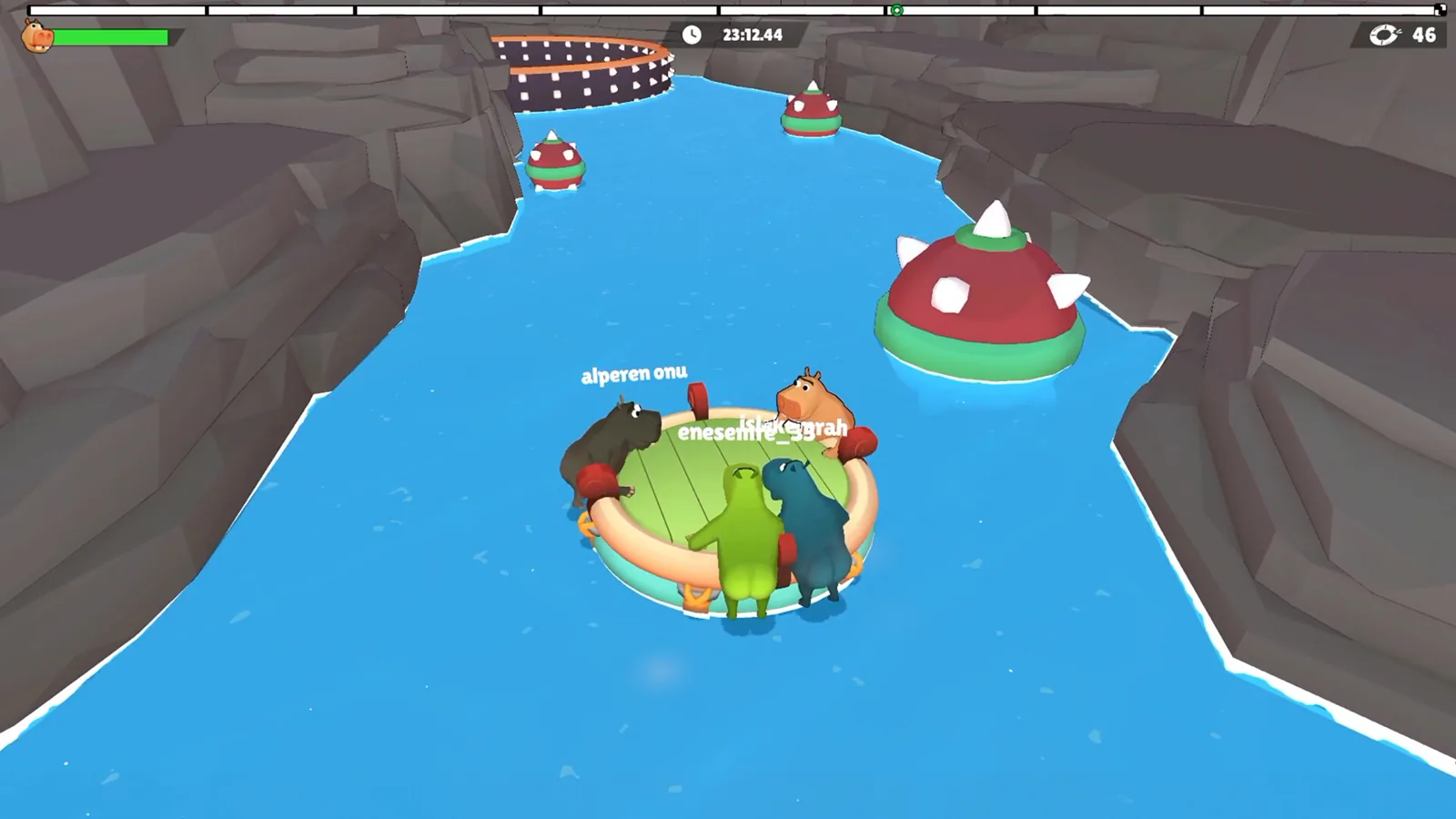
trailer: the two videos to watch
Two Fart Together trailers are on YouTube — an announce trailer and a demo trailer labeled with the studio name — while Steam lists the game for Oct 29, 2026.
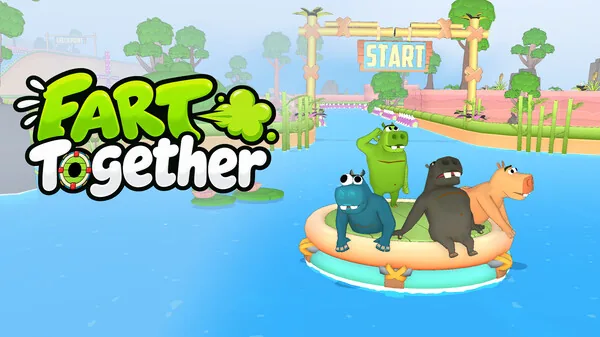
Demo: Free Steam Co-Op Trial
What the Fart Together demo includes: Steam download, 2–4 player raft co-op, PC specs, run length and coordination tips from recorded runs.
Demo vs Full Game: What’s Different
The Fart Together demo is free 2–4 player co-op on Steam; the full game is still listed as coming soon. Compare player counts, content and cost.
Crossplay: What’s Confirmed Before Launch
Crossplay isn't confirmed for Fart Together. The Steam page lists Windows only — here's how to plan a PC group, check specs, and read the demo news.
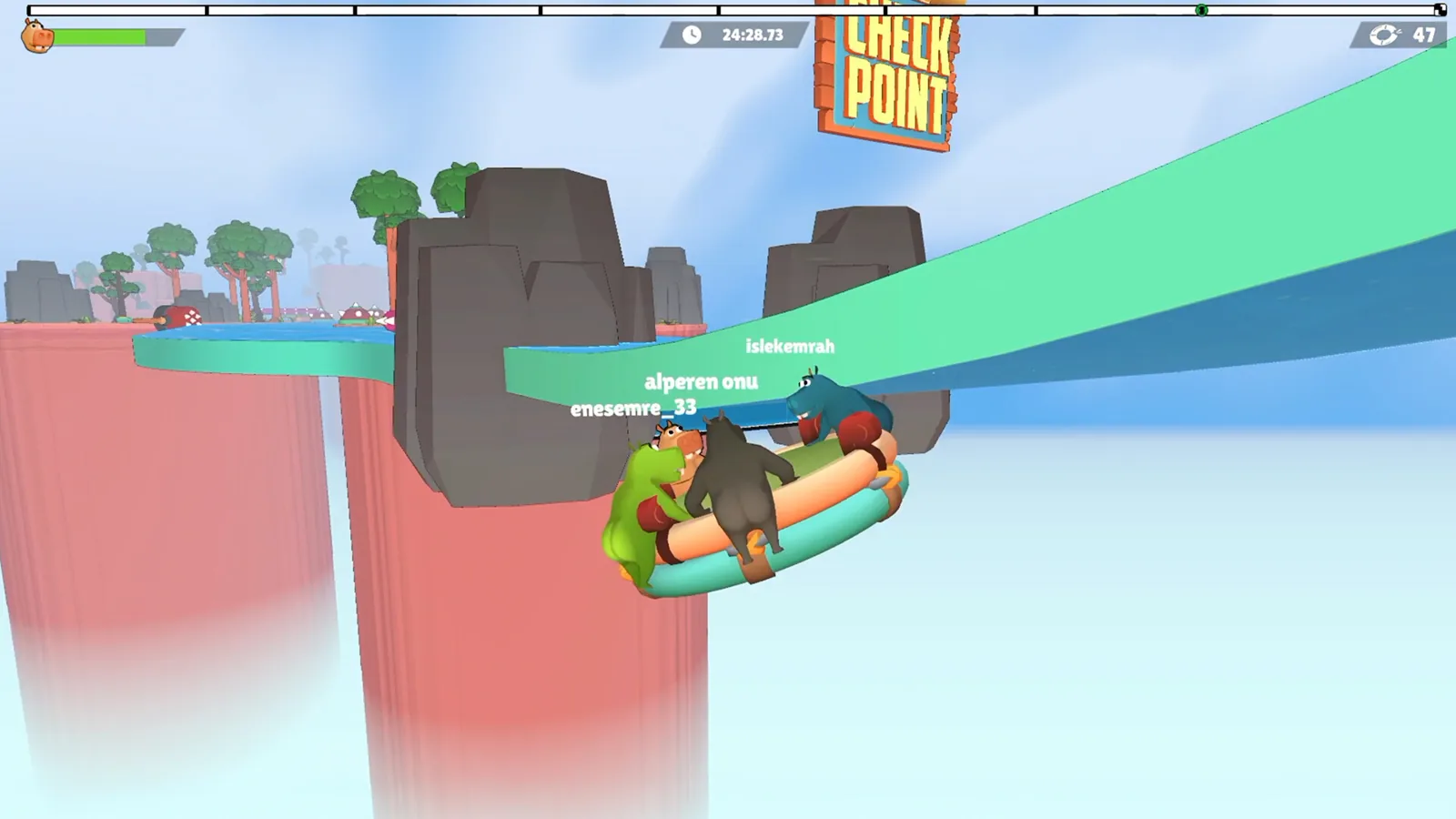
Controller Support: Windows Gamepad
Fart Together's Steam page lists full controller support plus DualShock and DualSense pads on Windows. What's confirmed, what isn't, and how crews steer.