Fart Together Raft Steering: Co-Op Turns and Timing
How the shared raft in Fart Together responds to each player, plus a practical routine for turns, narrow gaps and moving hazards with 2-4 friends.
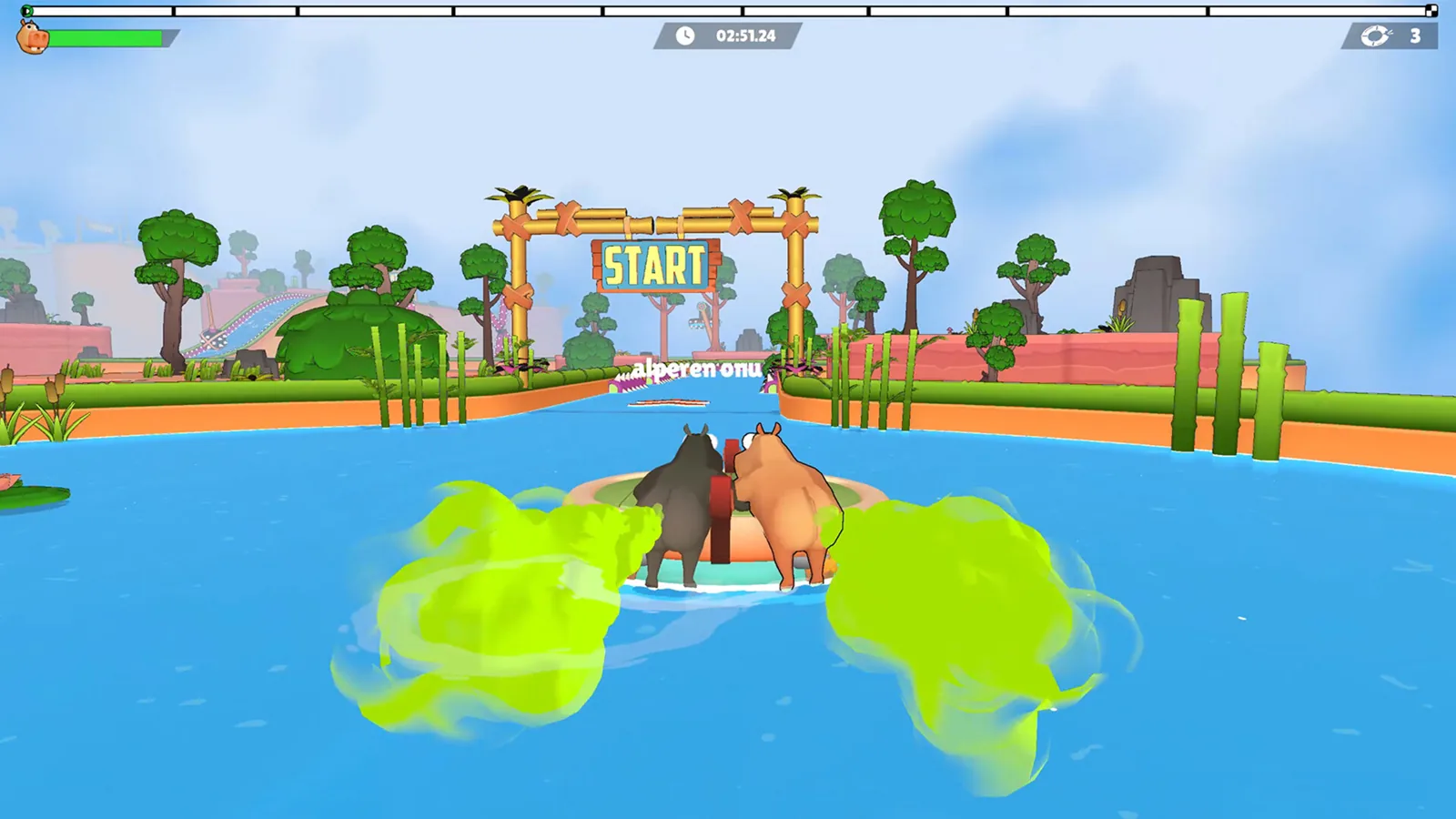
Table of Contents
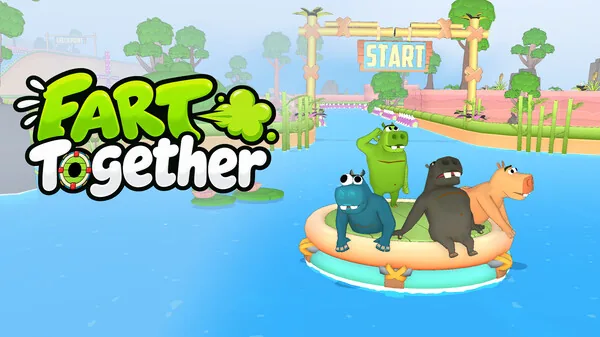
Steering in Fart Together is a group action, not a driver's seat. There is no single captain with a wheel: the raft moves because of what every player on board does, so a turn is the sum of several small inputs arriving close together. The developer describes the core loop on the official Steam page as 2–4 players steering one raft "using fart power," and states plainly that the trick is not pushing harder but acting at the same moment.
That is the whole answer in one line: read the obstacle, agree on a direction, have everyone commit briefly on the same cue, then watch the raft before adding more. The rest of this page is about doing that reliably.
How the shared raft actually moves
According to the Steam listing, the raft "reacts to the force, direction, and timing of each player." Those three words cover nearly every steering problem you will hit:
| Factor | What it means on the water | What goes wrong |
|---|---|---|
| Force | How hard the combined push is | Several strong pushes stack and overshoot the line |
| Direction | Where players aim relative to the raft | Mismatched aim cancels out or twists the raft |
| Timing | When each input lands | Late or staggered inputs turn a clean move into a wobble |
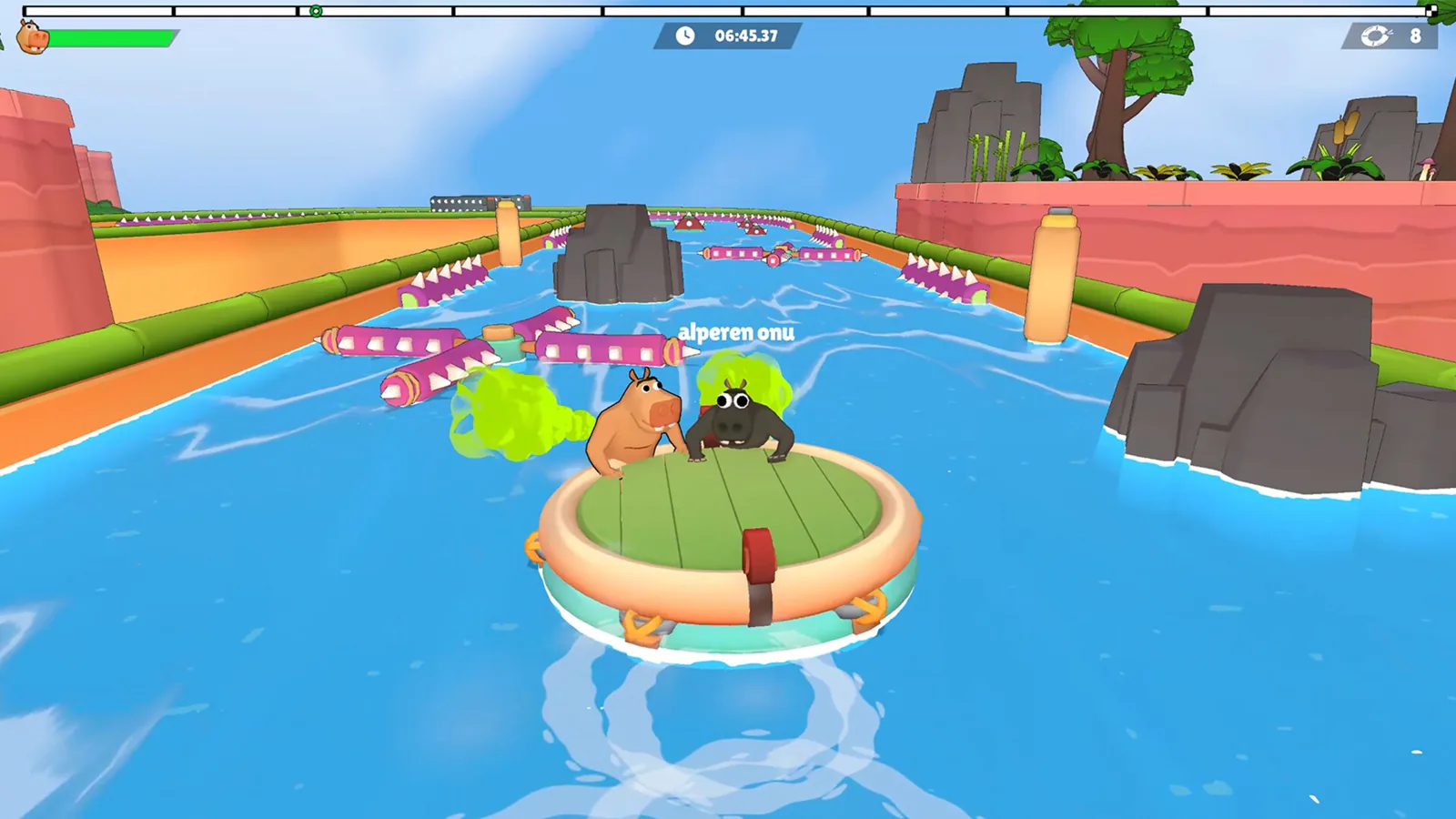
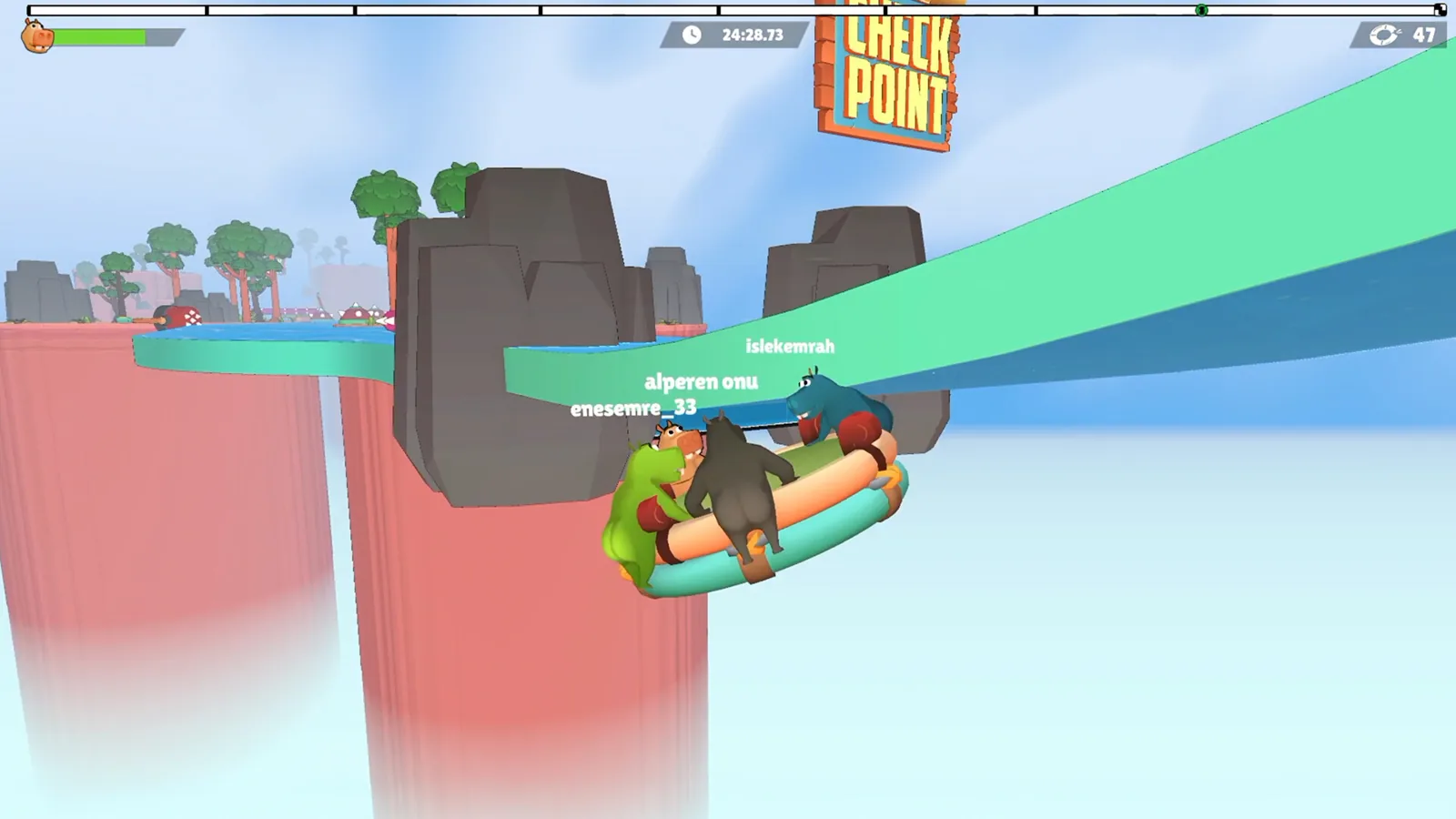
The developer's own framing is blunt about the consequence: one player aiming the wrong way, reacting late, or firing at the wrong moment can push the whole raft off course. Multiplayer playthroughs bear this out. In a shared-raft video from a group of friends (YouTube), the crew repeatedly calls for less power — "slow us down" — when the raft builds more momentum than the upcoming section allows, and one player notes that nobody could tell who had caused a particular drift until they looked at the trail left behind. That is the practical lesson: when everyone moves at once, you lose the ability to tell which input did what.
Teach each player their own input first
Before you attempt a coordinated corner, spend a few restarts on the simplest possible exercise. Fart Together Wiki recommends this as a crew warm-up, and it is sound advice for any physics co-op game:
- Pick one player to make a short, gentle input while everyone else holds still.
- Watch how the raft's heading changes, and note how much it carries after the input ends.
- Repeat with a second player, then a third, until each person has seen their own effect.
- Only then try two players acting on the same call.
The point is not to discover hidden physics values — nobody has published those — but to build a shared mental model of how much one person's push does. Once the crew knows that, "a small adjustment" becomes a meaningful instruction rather than a guess.
A repeatable routine for turns
For a sharp corner, the sequence that holds up is: look past the bend, agree on the correction, push once, then check.
| Step | What the crew does | What you are watching for |
|---|---|---|
| 1 | Identify where the raft must point after the corner | A clear target line on the exit, not just the apex |
| 2 | Agree aloud on which way to adjust | One direction, understood by everyone |
| 3 | Make one brief coordinated input | The raft's nose beginning to swing |
| 4 | Pause and read the response | Whether the heading is drifting toward the exit |
| 5 | Add more only if the first push was too weak | A second push that does not overshoot |
Step 5 is where most crews fail. A corner that felt slow invites a second, harder push, and by then the raft is already rotating. The safer habit — again matching what Fart Together Wiki advises from community play — is to judge the turn by the exit line rather than by whether you clipped the wall beside you. A clean pass that points straight at the next hazard is still a bad turn.
Narrow gaps and moving hazards
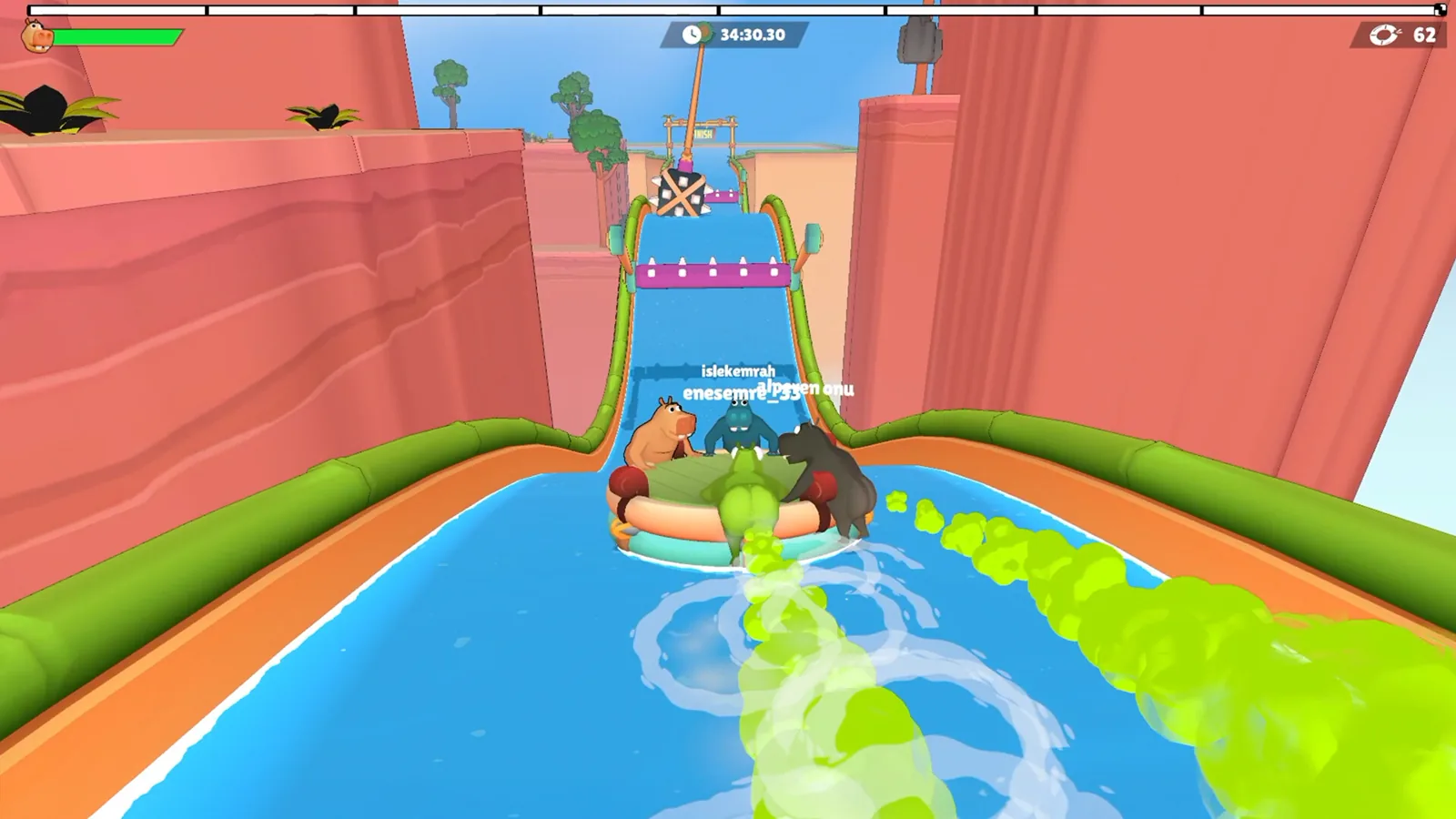
Tight passages reward patience more than precision. Line up while there is still room, announce that you are making an alignment correction, and ask the crew to hold unless their push is part of the plan. Entering off-angle is usually recoverable on the next attempt; entering fast and off-angle is not.
For moving obstacles the problem shifts from direction to rhythm. Watch the hazard complete a cycle, pick the gap, and agree on a single cue for the moment to move. The friends in the playthrough video do exactly this in miniature — counting "time it, time it" before a burst — and their failures tend to come from pushes that continue after a bounce rather than from bad aim. After any collision, treat the raft as a new situation and re-read its heading before repeating the move you had planned.
When a section keeps failing
Change one thing. If the approach was fine but the final cue came late, move the cue earlier; if the timing was right but the raft entered crooked, fix the alignment instead. Rebuilding the whole plan after every crash makes it impossible to know which change worked.
Between attempts, a four-question check keeps the discussion short:
- Does everyone know the immediate objective — the gap, the corner, or the wait?
- Is the direction agreed and unambiguous?
- Who is making the next adjustment?
- What cue starts the move, and what do we reassess after it?
Practice and version notes
The free Steam demo is the right place to drill all of this. The Steam page lists the game as free to play with online co-op and full controller support on Windows, and a developer announcement from 17 October 2026 reports over 3,500 concurrent demo players and 20,000+ wishlists, with the demo being patched from feedback. The full game is listed as coming soon with a 29 October 2026 date on that page. Controls are not spelled out there: the page confirms keyboard-only and controller options exist but does not list default bindings, so treat any specific key someone quotes as unconfirmed for your build.
One clarification worth making, because the name is shared: the Google Play listing for a game called Fart Together describes a single-player mobile raft racer with touch controls and boost charging. That is a different product from the Steam co-op game, and its controls do not transfer.
Next steps
- If your crew keeps desyncing, read Fart Together Timing: Getting the Crew to Act Together for the cue-and-call side of the problem.
- To check whether the demo covers the courses you are practicing on, see Fart Together Demo vs Full Game.
- For gamepad versus keyboard setup before a session, see Fart Together Controller Support.
FAQ
How do players steer the raft in Fart Together?
By combining their fart inputs. Each player's force, direction and timing affect the one shared raft, so steering means the crew agreeing on a direction and committing together rather than one person driving while others watch.
How many players share one raft?
The co-op mode is built for 2–4 players on the same raft, according to the official Steam page. A competitive player count is mentioned by Fart Together Wiki as a separate mode, but the Steam material here only describes the co-op figure.
How can the team stop a turn from overshooting?
Make the first correction deliberately small, then pause to see the raft's heading before pushing again. Most overshoots come from a second push added before the first one has finished turning the raft.
Can I practice raft steering before launch?
Yes — the free demo on Steam is a 2–4-player co-op build, and the developer's 17 October 2026 announcement confirms it is actively being patched, so course layouts may still change between sessions.
Related Articles
Continue Reading
Timing: Getting the Crew to Act Together
How fart timing works in Fart Together's co-op rafting, with cue routines, obstacle-by-obstacle preparation, and demo practice habits.
Steam Page: Demo, Status and PC Specs
Fart Together Steam status as of 2026-10-23: the free demo is playable now, the full game is coming soon. Player counts, PC specs and platform details.
Steam Community: Finding Crews and Demo Play
How the Fart Together Steam community works: find a co-op crew for the free demo, agree on callouts, and send feedback the developer can use.
Steam Deck Compatibility and Controls
Fart Together Steam Deck status: the community Unknown rating, a ProtonDB Perfect report, controller support, Windows specs and co-op steering tips.
Demo: Free Steam Co-Op Trial
What the Fart Together demo includes: Steam download, 2–4 player raft co-op, PC specs, run length and coordination tips from recorded runs.
Demo vs Full Game: What’s Different
The Fart Together demo is free 2–4 player co-op on Steam; the full game is still listed as coming soon. Compare player counts, content and cost.